
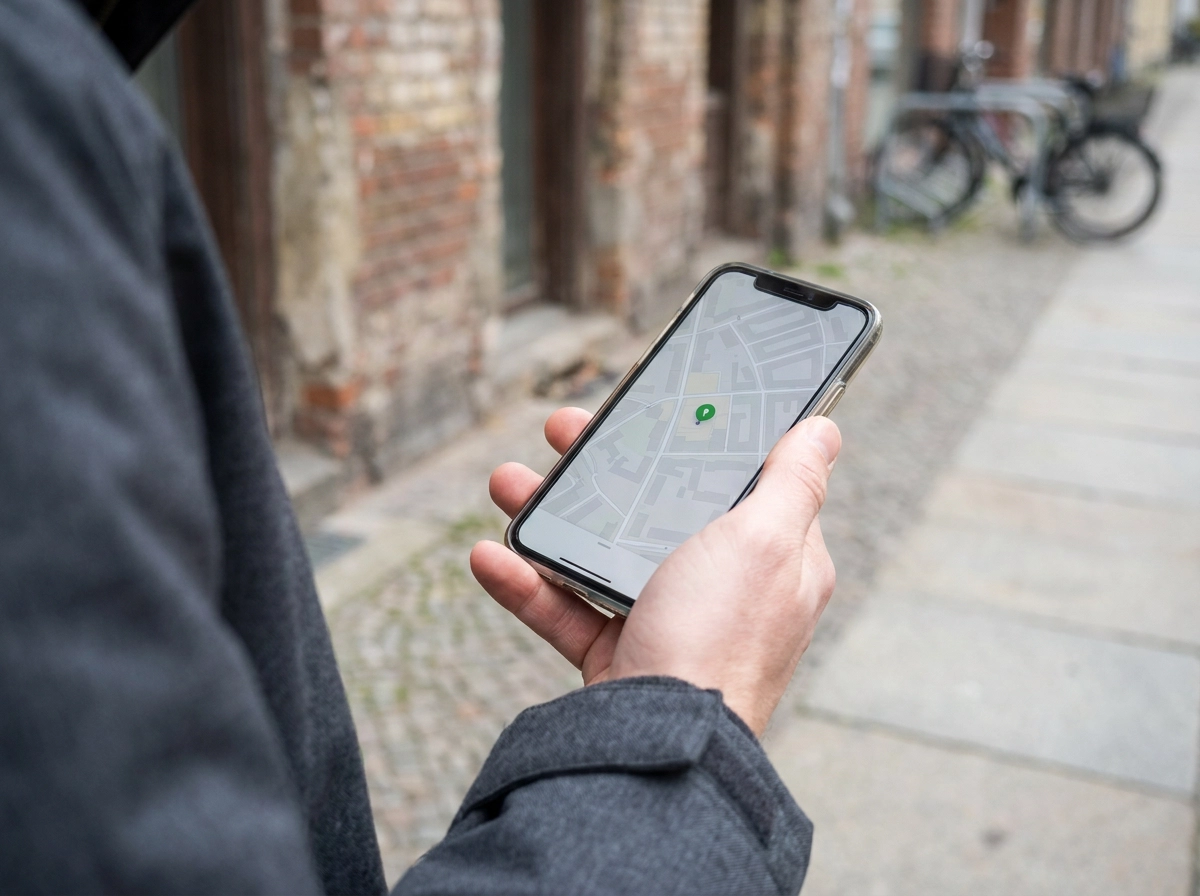
Picture this: someone in Lajpat Nagar picks up their phone and types “best CA near me” or “plumber in Noida sector 18.” They are not browsing. They are ready to hire someone right now. The only question is whether your business shows up when they search, or whether a competitor takes that customer instead.
This is exactly why local SEO services in Delhi NCR have become one of the smartest investments a small or mid-sized business can make. Unlike broad, national SEO, local SEO targets the people closest to you, the ones most likely to walk through your door or call you within the hour. In fact, 76% of people who search for something locally on their phone visit a business within 24 hours. That is not traffic. That is footfall.
In this guide, you will learn how to set up and optimise your Google Business Profile, find the right local keywords, build a consistent online presence, generate more reviews, and even get found when customers ask AI tools like ChatGPT or Gemini. You will also get a simple 4-week action plan you can start today, with no technical background required.
Why Local SEO Is a Different Game from Regular SEO
Nearly half of all Google searches carry local intent, meaning millions of people every day are not browsing abstractly; they are searching for something nearby right now, ready to act. That is not an audience you can reach more cheaply through any other channel.
Local SEO and national SEO look similar on the surface but work by completely different rules. National SEO is a long game built on domain authority and backlinks, signals that take years and significant budget to accumulate. Local SEO is scored on three separate signals: relevance (does your business match what the person searched for?), distance (are you physically nearby?), and prominence (does Google have enough evidence to trust you?). None of those signals care about how many websites link to you.
In Delhi NCR, this matters even more because the competitive map is hyper-local. A dental clinic in Sector 22 Dwarka is not losing patients to a clinic in Connaught Place; it is competing with two or three practices on the same street. Winning locally means being the most trusted option within a tight geographic radius, not the most visible brand across the city.
This is also where local SEO becomes genuinely accessible to an owner-operator. The tactics that move the needle here are Google Business Profile completeness, consistent business details across every directory, and a steady stream of genuine reviews. These are not things that require a six-figure agency retainer. They require consistency and a basic understanding of what Google is actually measuring, which is exactly what the rest of this guide covers.
Google Business Profile: The Single Highest-Leverage Action You Can Take
Of all the signals Google weighs when deciding which three businesses appear in the map pack, your Google Business Profile carries more weight than anything else. Getting it right is the fastest, most cost-effective move available to any Delhi NCR business owner.
Start with profile completeness. Research consistently shows complete GBP profiles attract 7x more clicks than incomplete ones (source: freelancerabhi.com citing GBP data). Fill in every field: business description, services, products, attributes, opening hours, and website URL. Leaving sections blank is the equivalent of handing a customer a half-finished brochure.
Choose your categories deliberately. Categories directly control which searches your profile is eligible to appear for. A solar installation company in Gurugram should select “Solar Energy Contractor” as its primary category, not the vague “Home Improvement.” Primary category is one of the most important relevance signals you can configure, so be specific. Add secondary categories for related services, but never stack irrelevant ones to chase broader traffic.
Keep the profile active. GBP freshness is now a recognised ranking signal. One post per week is enough to maintain that freshness: a completed job, a seasonal offer, a staff introduction. Build it into a Monday morning habit and it takes under ten minutes.
Configure your setup correctly for your business type. If you are a service-area business, such as a plumber, solar installer, or home cleaner, hide your home address and configure your service areas instead. List every NCR zone you actually cover: Dwarka, Janakpuri, Uttam Nagar, Najafgarh, and any others. Leaving service areas blank means Google cannot match you to searches in those localities. If the budget is genuinely tight, this free configuration step alone can open up search visibility across multiple suburbs without spending a rupee.
For brick-and-mortar businesses, photos matter more than most owners realise. Dental clinics, medical practices, and similar businesses should upload at least ten photos covering the interior, exterior, staff, and equipment. Photo-rich profiles tend to build more trust before a visit; uploading a full set is standard best practice.
Finally, watch your engagement signals. Click-to-call rate, direction requests, and the time people spend reading your profile all feed into Google’s local prominence ranking. A complete, active, well-photographed profile earns those interactions naturally.
Local Keyword Research: Finding the Phrases That Actually Bring in Buyers
Once your GBP is in shape, you need to feed it, and your website, the right keywords. This is where most small businesses waste months targeting terms they can never win.
Stop competing where you can’t win. Typing “dentist” or “solar panel installation” into Google surfaces national aggregators and large directories with thousands of backlinks behind them. A single-location business in Dwarka cannot outrank that. What you can rank for is “dentist in Dwarka Sector 22” or “solar installer in Gurugram.” These local entity keywords have far less competition and far higher commercial intent from nearby buyers.
Map every service across three geographic layers. For each service you offer, build a list at three levels: city (“Delhi”), subzone (“Dwarka,” “Noida Sector 18,” “Janakpuri”), and neighbourhood or sector (“Sector 22 Dwarka,” “Sector 15 Noida”). Google can rank these independently, which means a dedicated page targeting each phrase has its own shot at the map pack. Three services across three geographic layers gives you a keyword list of nine to start with, all of them genuinely winnable.
Find the exact phrasing using free Google tools. You need no paid software for this. Open Google, type your service and area, then pause and read the autocomplete suggestions. Scroll to the bottom of results and check the “Related searches” strip. Click any result and note the “People also ask” questions. These surfaces reveal the phrasing real searchers use, a practical proxy for local demand with no tools required.
Add buying-intent modifiers. Bare service terms attract researchers. Phrases containing “cost,” “price,” “charges,” “fee,” “best,” “top rated,” or “available today” attract buyers. A searcher typing “dental implant charges in Dwarka” is closer to booking than one typing “dental implant.” Prioritise these modifier-rich phrases in your keyword list.
Run a quick competitor gap check. Type your top three service keywords into Google Maps. Note which businesses appear consistently. Visit their websites and check which service pages they have built and what their GBP categories list. That tells you exactly what we fix first when closing the gap between you and whoever currently owns the map pack.
Build a simple keyword map. Assign one primary local keyword to each page, supported by two to four secondary keywords. Make sure the geography in the keyword matches the area you actually serve. A page targeting “immigration consultant in Noida Sector 18” should not be sitting on a website that lists no Noida service area anywhere.
NAP Consistency and Citations: The Foundation Google Keeps Checking
Once you have your keyword map sorted, there is one more foundational layer that quietly affects every ranking signal you have built: whether Google sees the same business details everywhere it looks.
NAP stands for Name, Address, and Phone number. Google cross-references these three data points across your website, your GBP, and every directory listing on the web. Inconsistencies can weaken the local trust signals you’ve built, even if the discrepancy looks trivial to a human reader.
And trivial is exactly the problem. Google’s systems may struggle to reconcile minor variations like “Road” versus “Rd.” or “Pvt. Ltd.” versus “Private Limited”, reducing confidence in which details to trust. A landline number on Justdial and a mobile number on your Facebook page compounds the problem. The more conflicting versions exist, the less confident Google becomes, and reduced confidence means reduced rankings.
Run a NAP audit first
Search your business name in Google and open every result that displays your address or phone number. Common Indian directories to check: Justdial, Sulekha, IndiaMart, TradeIndia, Yelp, and Apple Maps. Copy every version of your details into a spreadsheet and compare them against your GBP. Find out where you actually rank today before you start correcting listings, so you have a baseline to measure progress against.
Priority citations for Delhi NCR businesses
Fix these platforms before anything else: Google Business Profile (non-negotiable), Justdial, Sulekha, Bing Places, Apple Maps, and your Facebook Business Page. Then add vertical-specific directories relevant to your category: Practo for medical and dental practices, Housing.com for real estate agents, and similar industry platforms.
After correcting existing listings, add new citations gradually on high-authority directories. Bulk-submitting to hundreds of low-quality directories offers little benefit today and may create noise that works against you.
Lock in one canonical format
Decide on a single version of your business name, address, and phone number, then record it in a shared document. Every team member, web developer, or future agency uses that exact version, no exceptions. This small habit prevents the inconsistency problem from creeping back in.
Location-Specific Landing Pages: Giving Google a Page to Rank for Every Area You Serve
Once your NAP is consistent across every directory, the next job is giving Google individual pages to rank for each area you serve.
Your homepage cannot do this alone. If you run a plumbing business covering Dwarka, Janakpuri, and Uttam Nagar, a single homepage sends one weak, blended signal to Google. A dedicated page for each zone gives Google a clear, indexable answer to “plumber in Janakpuri” that your homepage simply cannot provide.
What goes on each location page
Every location page needs five things working together:
- The area name in the H1 heading and repeated naturally throughout the body copy
- A description of the specific service you offer there, not a copy-paste of your homepage
- A locally relevant problem or use case (for example, older pipe fittings common in DDA flats in Uttam Nagar)
- Your contact details and an embedded Google Map
- Enough genuinely unique content to give Google something substantive to index, as a rough guide, aim for at least a few hundred words of original copy per page
That last point matters. Pages that simply swap a city name into a template risk being treated as thin content; each page should give Google something genuinely distinct to index.
Build a crawlable location footprint
For service-area businesses, create one page per zone and link all of them from a parent “Service Areas” page. This structure tells Google’s crawler how your coverage is organised and makes every individual page easier to discover and index. Think of the parent page as the map and each zone page as a destination on it.
Add schema markup
Adding LocalBusiness schema markup is widely recommended by SEO practitioners to help Google parse your business details in machine-readable format. You don’t need to write code from scratch; free schema generators let you fill in a form and copy the output into your page. This increases your eligibility for rich results in search.
Layer in local trust signals
Each page becomes significantly stronger with neighbourhood-specific proof: a testimonial from a customer who mentions the locality by name, a reference to a nearby landmark for geographic context, and any local accreditations relevant to that area.
If you’d rather have this built properly from the start, the one accountable team in Sector 22, Dwarka handles location page architecture as part of every local SEO engagement.
Review Generation: Why Reviews Are Now Both a Ranking Factor and a Revenue Signal
Once your location pages are live, the next signal Google watches is what real customers say about you.
Reviews are a direct ranking input for the local map pack. Responding to reviews is widely regarded as a positive engagement signal and demonstrates to both Google and potential customers that you are an active business.
Velocity matters as much as volume. A regular flow of new reviews signals ongoing activity to Google and to prospective customers reading your profile. A profile sitting on 50 reviews earned two years ago with nothing recent is a freshness red flag, the same way an inactive GBP loses posting momentum.
Build a zero-friction request system. After every completed job or appointment, send a WhatsApp message with a direct link to your GBP review form. Most Delhi NCR customers will complete it in under two minutes if the link drops them straight into the text field. You can generate that short link free inside your GBP dashboard under “Ask for reviews.”
Respond for SEO benefit, not just politeness. Use the customer’s name, name the service, and drop in the location naturally. Something like: “Thank you, Priya, for trusting us with your root canal at our Dwarka clinic” does three things at once: it acknowledges the customer, signals to Google what you do and where, and shows prospective patients reading the review that you are engaged.
Negative reviews are not fatal if you handle them quickly. A calm response that acknowledges the issue, offers a resolution, and closes professionally often converts a sceptical searcher into a caller, because accountability is reassuring. Ignoring a one-star review is far more damaging than the review itself.
One firm rule: never buy or incentivise reviews. Google’s guidelines prohibit incentivised reviews, and a policy violation can result in profile suspension, removing you from the map pack entirely.
AI Search Readiness: Getting Found When Customers Ask ChatGPT or Gemini
Reviews build trust with Google. What many business owners don’t realise is that the same signals are increasingly shaping what AI assistants recommend too.
AI assistants draw on publicly indexed web content to generate recommendations; the same signals that strengthen your Google presence, a complete GBP, consistent citations, strong reviews, also make your business more visible and legible to these tools. That means the optimisation work you do for Google Maps carries over to AI recommendation visibility as well.
A fully optimised GBP with consistent NAP, a solid review count, and regular recent activity gives AI tools the clearest, most trustworthy picture of your business. No single additional step is needed; the foundation already covers it.
One thing that does make a measurable difference is how your website describes what you do. Write clear, plain-language descriptions of each service with the locations you serve stated explicitly in the body copy, not just tucked into a meta tag. A sentence like “We offer solar panel installation across Gurugram, Dwarka, and Noida” does more for AI visibility than location keywords hidden in backend fields that users never read.
Monitor your AI visibility yourself. Open ChatGPT, Gemini, and Perplexity and ask “best [your service] in [your area]” every few weeks. Note whether your business appears, which competitor shows up consistently if you don’t, and what the AI says about them. That tells you exactly what content gap to close.
This is a newer layer of search, and the rules are still forming. Find out if AI recommends you to see how Nakh Marketing’s generative engine optimisation service structures your content and entity signals for visibility in AI-generated results alongside your map pack rankings.
Your 4-Week DIY Local SEO Roadmap

All of the tactics above feed into the same compounding system. Here is how to put them into motion in one month.
Week 1: GBP audit. Verify your profile if you have not already. Then complete every field: business description, services, products, attributes, and opening hours. Upload at least 10 photos covering your interior, exterior, staff, and work. A complete profile is the single highest-return task of the four weeks.
Week 2: NAP sweep. Search your business name across Google, Justdial, Sulekha, Bing Places, and Facebook. Open a spreadsheet and log every version of your name, address, and phone number you find. Correct inconsistencies one platform at a time, starting with the highest-traffic sources first.
Week 3: Keywords and pages. Choose your top three services and top three service areas. For each combination, identify the exact phrase a buyer in that area would search. Then audit your website: does each phrase have a dedicated page, or at least a clear plan to build one? If not, that gap is costing you enquiries right now.
Week 4: Review system. Draft a short WhatsApp message asking for feedback. Generate a direct GBP review link using Google’s review link generator and paste it into that message. Send it to your five most recent satisfied customers. This is your starting run, not a one-off.
From week 5 onward, keep the system alive with three small habits each week: one GBP post (a completed job, a service explanation, or a seasonal offer), one citation check or new directory submission, and one review request per completed job or appointment. The effort is modest; the compounding effect is not. For a realistic picture of what the SEO timeline honestly looks like, the next section covers exactly that.
Common Local SEO Mistakes That Waste Budget and Slow Results
Following the roadmap is the right move. Knowing what not to do is just as important.
Running Google Ads without a complete, claimed GBP burns budget faster than almost anything else in local marketing. Paid clicks land on a page with no local trust signals, no reviews, no photos, no service details. The visitor has no reason to call, so you pay for the click and the phone stays quiet. Sort the GBP first, then run ads.
Bulk citation building across low-quality directories offers little benefit today and risks creating conflicting data that works against you. Target 20 to 30 high-authority, relevant directories (Justdial, Sulekha, Bing Places, Practo if you are a clinic, Housing.com if you are in real estate) and keep every listing clean.
Each service area needs its own dedicated page, as covered earlier. A paragraph of location names stuffed into your homepage footer creates no rankable page for any of those areas.
Claiming your GBP and then ignoring it hands ground to any competitor who posts weekly and responds to reviews. A five-minute weekly post costs nothing and keeps your profile active.
Measuring success by impressions and keyword rankings while the phone stays quiet is the oldest agency trick in the book. Those numbers can look impressive while your enquiry volume sits at zero. The only metrics that matter are call volume, direction requests, and qualified leads.
Ignoring review velocity is a slow-moving mistake that sneaks up on businesses. As a general pattern, a competitor with recent review activity is likely outperforming a profile whose last review is years old. As covered in the reviews section, recency matters, keep requests going weekly.
What Realistic Results Look Like in the First 90 Days
Knowing the mistakes is useful. Knowing what to expect when you do things right is even more useful, especially when you are three weeks in, the phone hasn’t rung, and you’re wondering whether this is working.
Here’s what a well-executed 90-day local SEO push actually looks like.
Month 1: Foundation, not results. Your GBP is fully optimised and posting on a weekly schedule. NAP is consistent across your priority directories. At least one location-specific service page is live on your website. Nothing visible happens yet, and that is completely normal. What improves is data quality: Google is reading cleaner, more consistent signals about your business for the first time. Think of it as laying concrete. You don’t build on it immediately.
Month 2: Early signals start moving. GBP engagement metrics begin to shift. Profile views tick up week over week, direction requests appear where there were none, and click-to-call numbers show early life. This is Google processing the freshness and consistency signals you introduced in month one. If your review request system is running, your review count should be climbing too.
Month 3: First map pack appearances. Based on what we typically see across local SEO campaigns in Delhi NCR, for lower-competition service categories and suburb-level keywords, some map pack appearances begin here. A home cleaner in Uttam Nagar or a solar installer in Najafgarh has a realistic shot at this point. For higher-competition categories in central Delhi, expect month 4 or 5 instead.
Beyond 90 days, the picture is this: in our experience running local SEO for businesses across Dwarka, Gurugram, and Noida, six to nine months brings real, consistent traction, and months 9 to 12 are where the compounding effect becomes most visible, with enquiry volumes that hold and grow. Any agency quoting page-one results in 30 days is misrepresenting how Google’s algorithm actually processes trust signals.
Track these metrics at 90 days, not impressions alone:
- GBP profile views (week over week)
- Click-to-call volume
- Direction requests
- Map pack appearances for your primary keywords
For most Delhi NCR service businesses in dental, home services, legal, and solar categories, based on what we typically see, a measurable lift in enquiries arrives between months 3 and 6. The foundation work you do now is what makes that lift possible.
Start Small, Stay Consistent, and Let the Compounding Work
The compounding effect is the whole point. Every GBP post, every corrected directory listing, every review response adds a small signal. Those signals stack week after week until Google has enough evidence to trust you and surface your business above competitors who stopped paying attention.
Four actions drive the majority of that trust-building:
- A complete, active Google Business Profile updated at least weekly
- Consistent NAP across every directory where your business appears
- At least one location-specific landing page for each area you actually serve
- A steady flow of genuine reviews with prompt, specific responses to every one
If you are running a dental practice in Dwarka, a solar business in Gurugram, or any service business across Delhi NCR, these four levers are where your time pays off.
If you want to execute this yourself, the 4-week roadmap above is your starting point. Work through it in order and keep the weekly habits running from month two onward.
If you would rather focus on running your business, Nakh Marketing’s local SEO plans are built around the commercial keywords that actually generate enquiries. No lock-in contracts. You retain full ownership of your website, GBP, content, and every other asset we touch. The work starts where the phone calls come from.
Conclusion
Local SEO in Delhi NCR is not complicated, but it does require consistency. A fully optimized Google Business Profile, clean NAP citations across directories, location-specific landing pages, and a steady stream of genuine reviews are the four pillars that separate businesses getting daily enquiries from those invisible to ready-to-buy customers.
You now have the strategy, the roadmap, and the knowledge to avoid the mistakes that waste time and budget.
Start with your Google Business Profile today. Fix one citation. Request one review. Small actions, repeated consistently, build the trust that Google rewards.
Ready to accelerate the process? Nakh Marketing handles the execution so you can focus on serving the customers already searching for you.